
Ventilation for PEB Structures
A well-ventilated building is a productive building. Our PEB Ventilation Systems — including Ridge Vents, Roof Monitors, Turbo Vents, and Wall Louvers — ensure fresh air circulation, temperature control, and a healthy working environment. Designed to integrate seamlessly with your steel structure.
Get A Free Quotation
Introduction
Why Ventilation Matters for Your PEB Building
Every industrial shed, warehouse, or factory generates heat. Whether it’s from machinery, lighting, workers, or simply the sun beating down on the roof — hot air accumulates inside, creating an uncomfortable and potentially unsafe working environment.
Proper ventilation for PEB structures is not a luxury — it’s a necessity. It:
Removes hot air and humidity that can damage equipment and inventory
Improves worker health and productivity by maintaining fresh air circulation
Prevents condensation that leads to rust and corrosion of steel members
Reduces energy costs by lowering the need for artificial cooling
Extends building lifespan by controlling moisture and temperature
At Arise PEB Construction, we design and install complete ventilation systems for Pre-Engineered Buildings in Odisha — using a combination of natural and wind-driven ventilation solutions that work with your building, not against it.
Types Of Ventilation We Offer
Complete Range of PEB Ventilation Solutions
We offer four primary types of ventilation systems, each designed for specific applications and performance requirements.
A. Ridge Vents
What They Are :
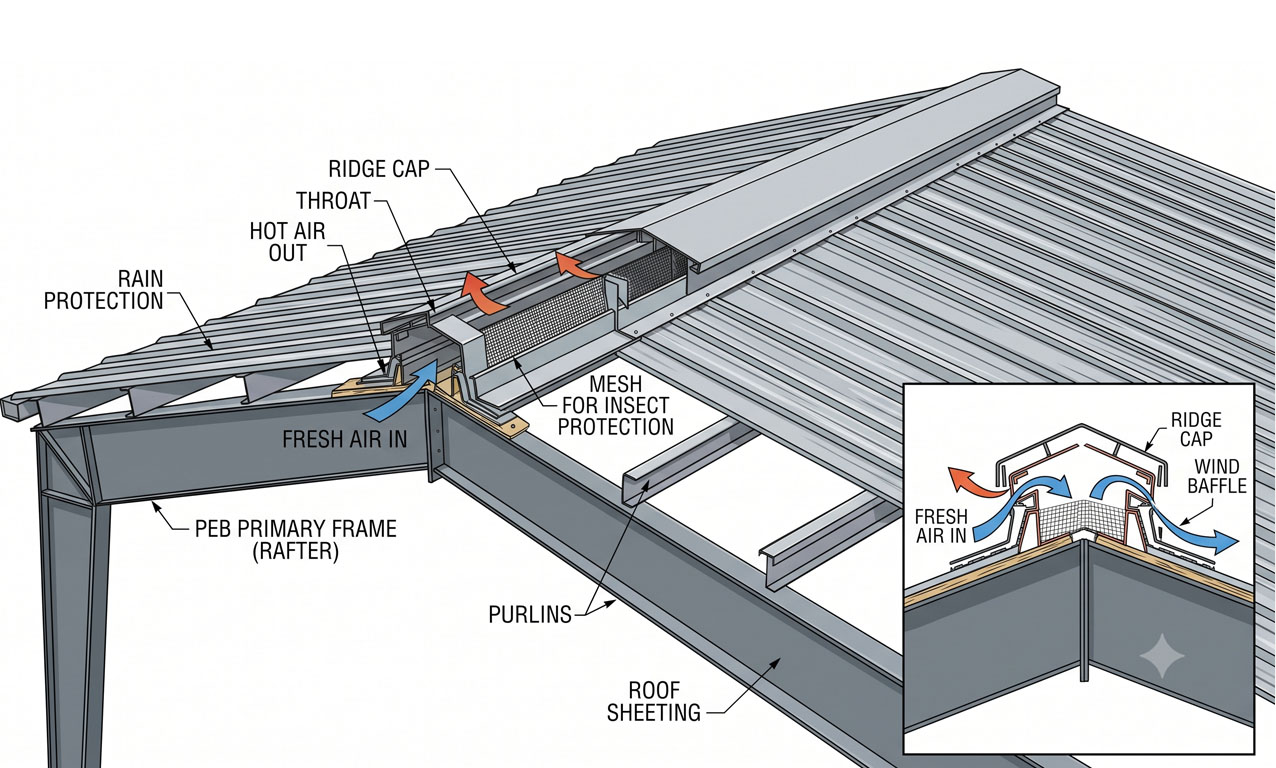
Ridge vents are compact openings installed continuously or at intervals along the roof peak. They allow hot air — which naturally rises — to escape from the building
How They Work :
Hot air inside the building rises to the roof peak and escapes through the ridge vent openings. This creates a natural draft that pulls fresh air in through lower openings (like louvers), creating continuous air circulation
Key Features :
Passive ventilation — no electricity required
Continuous or intermittent installation along the ridge
Weather-resistant design with bird screens
Available with or without dampers for airflow control
Galvalume or color-coated finish options
Applications :
Industrial sheds and warehouses
Factories with heat-generating processes
Any PEB structure requiring continuous exhaust
B. Roof Monitors
What They Are :
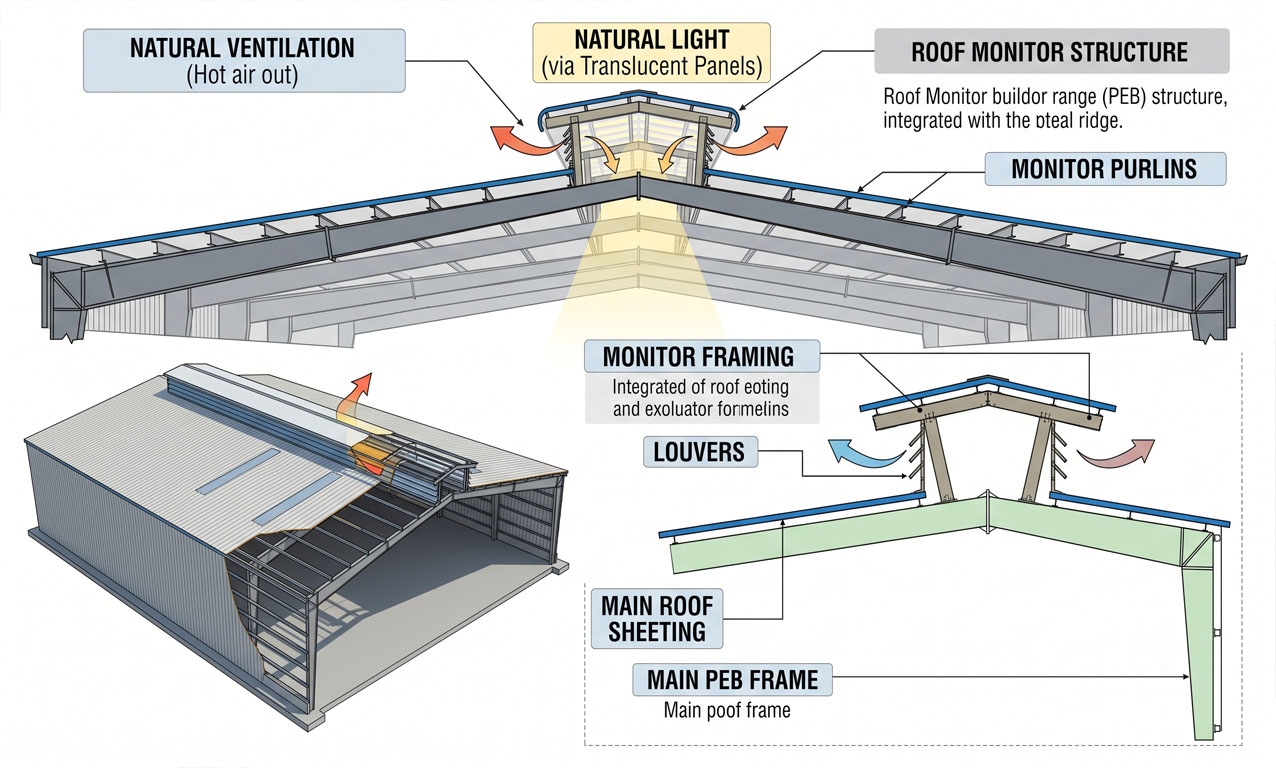
Roof monitors are large, elevated raised-roof structures integrated into the steel framing. They provide continuous exhaust and natural daylight — serving as both a ventilation and lighting solution .
How They Work :
Monitors are raised sections along the roofline with vertical or angled openings. Hot air rises into the monitor and escapes through the openings, while the elevated design allows natural light to enter through glazed panels. They are considered one of the most effective roof ventilation structures for industrial buildings .
Key Features :
Continuous exhaust along the building length
Integrated natural daylighting through glazing
Two-sided or single-sided configurations
Can accommodate catwalks for maintenance access
Most effective in hot and sunny climates
Applications :
Large manufacturing plants
Foundries and steel mills with excessive heat
Buildings requiring both ventilation and daylight
Warehouses with high heat loads
C. Turbo Vents (Wind-Driven Ventilators)
What They Are :
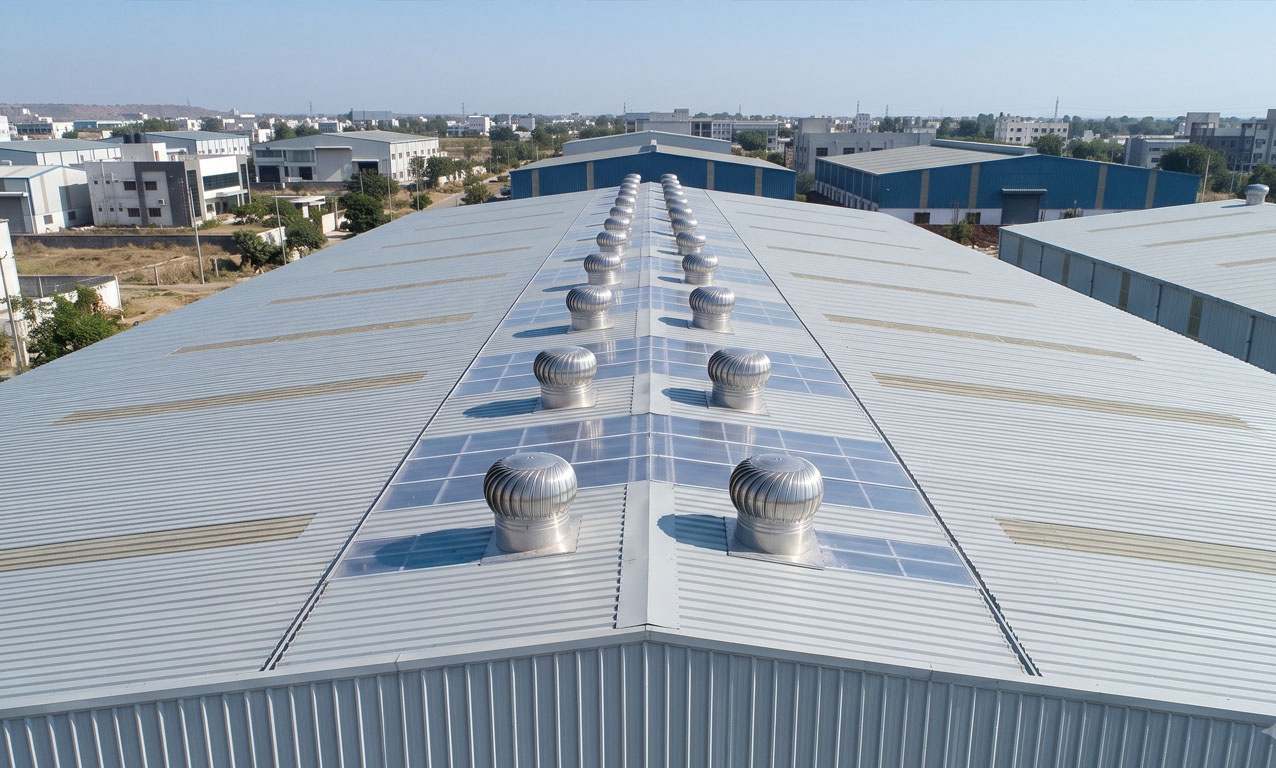
Turbo vents are dome-shaped, rotating gravity ventilators powered by exterior wind drafts. They use centrifugal force to pull out humid, hot air from the building .
How They Work :
The turbine spins when wind passes over the curved vanes, creating a low-pressure area that draws air out through the vanes . Even the slightest breeze causes the turbine to spin, and the flywheel effect keeps it rotating even after the wind stops — ensuring continuous ventilation .
Key Features :
Wind-powered — no electricity required
Self-perpetuating operation (warm air rising also powers rotation)
Corrosion-resistant aluminum construction
Available in 12″, 24″, and 36″ throat sizes
Capacities from 500 to 10,000 CFM
Lightweight — minimal roof load
Applications :
Warehouses and storage facilities
Factories with humidity issues
EC poultry sheds
Any building needing reliable exhaust
D. Wall/Gable Louvers
What They Are :
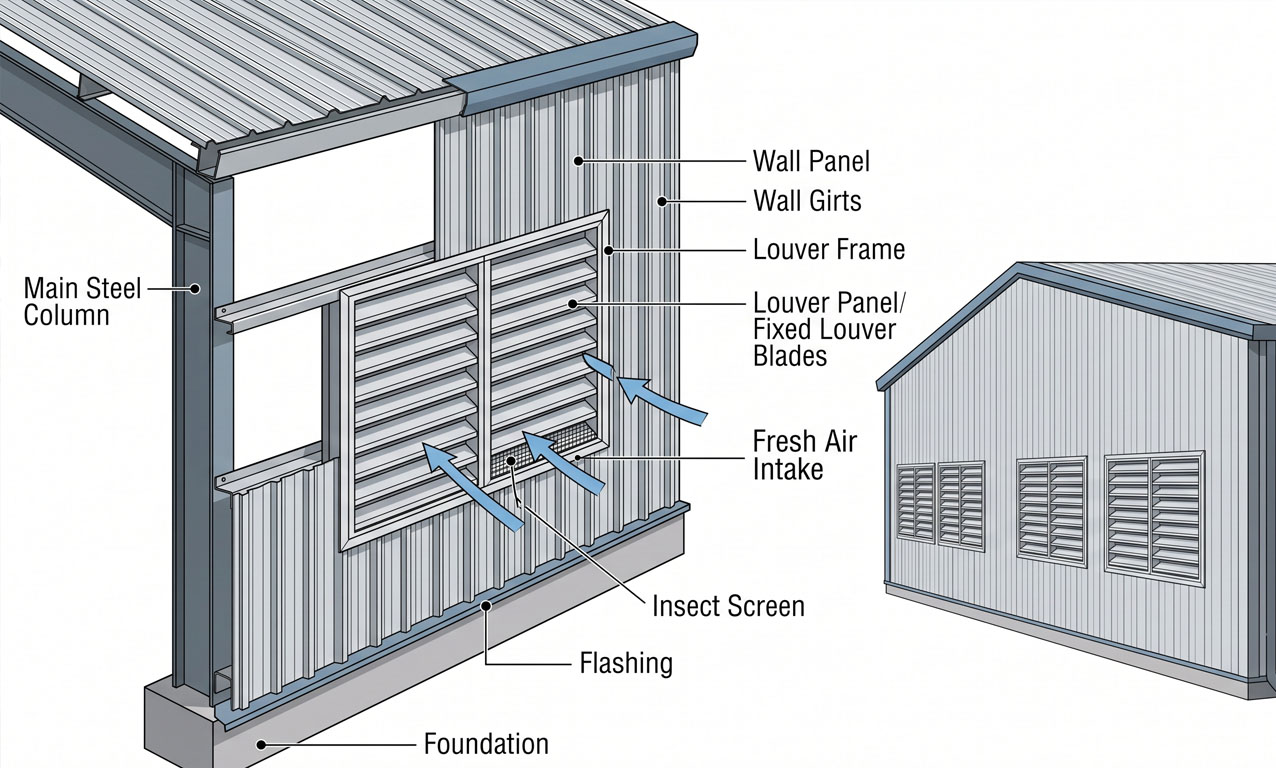
Louvers are framed sets of angled blades installed on sidewalls or end walls. They allow fresh air intake while blocking rain, dirt, and moisture .
How They Work :
Louvers work as the intake component of your ventilation system. Fresh air enters through the louver blades while rain and debris are deflected away. This incoming air replaces the hot air being exhausted through ridge vents, monitors, or turbo vents — creating a complete ventilation cycle .
Key Features :
Fixed or adjustable (manual/electric) options
45-degree blades for weather protection
Self-flashing for quick installation
Available in various colors and finishes
Florida-approved options for extreme weather
Applications :
Sidewall and endwall air intake
Gable end ventilation
Any PEB structure requiring balanced ventilation
Ventilation System Comparison
Choosing the Right Ventilation for Your Building
| Ventilation Type | Power Source | Best For | Key Advantage |
|---|---|---|---|
|
Ridge Vents |
Natural (passive) |
Continuous exhaust |
Low cost, no power needed |
|
Roof Monitors |
Natural (passive) |
Large buildings, daylight |
Ventilation + natural light |
|
Turbo Vents |
Wind-driven |
Humidity, reliable exhaust |
Works even in low wind |
|
Wall Louvers |
Natural (passive) |
Fresh air intake |
Essential for balanced system |
Optimal Ventilation Strategy :
The most effective ventilation system combines low-point intake (louvers) with high-point exhaust (ridge vents or turbo vents). This creates a natural “stack effect” where cool air enters low and hot air exits high .
Applications Of PEB Ventilation
Where Our Ventilation Systems Are Used
Our ventilation solutions are used across a wide range of PEB structures :
Industrial Sheds : Manufacturing units with heat-generating processes
Warehouses : Storage facilities requiring humidity control
Factories : Production floors with machinery heat loads
EC Poultry Farms : Climate-controlled sheds requiring precise air exchange
Cold Storage : Temperature-controlled facilities
Workshops : Repair and fabrication units
Godowns : Agricultural storage facilities
Multi-Storied Steel Buildings : Multi-level ventilation requirements
Technical Specifications
Engineered for Performance and Durability
| Parameter | Specification |
|---|---|
|
Ridge Vent Material |
26-gauge Galvalume steel, aluminum |
|
Ridge Vent Finish |
Galvalume, Kynar color-coated |
|
Turbo Vent Sizes |
12″, 24″, 36″ throat |
|
Turbo Vent Capacity |
500 – 10,000 CFM |
|
Turbo Vent Material |
Marine-grade aluminum |
|
Louver Blade Angle |
45 degrees |
|
Louver Options |
Fixed, manual adjustable, electric adjustable |
|
Design Standards |
IS 800, IS 875, NBC guidelines |
Installation Guidelines
Proper Installation for Maximum Performance
We offer four primary types of ventilation systems, each designed for specific applications and performance requirements.
Ridge Vent Installation :
- Install continuously along the roof ridge
- Ensure proper flashing and sealing to prevent water infiltration
- Verify bird screens are in place and undamaged
- Confirm adequate intake area (louvers) for balanced airflow
Turbo Vent Installation :
Position along the roof ridge or high points
Ensure the vent is level for proper rotation
Verify damper operation (if equipped)
Confirm clearance from obstructions
Key Features :
Continuous exhaust along the building length
Integrated natural daylighting through glazing
Two-sided or single-sided configurations
Can accommodate catwalks for maintenance access
Most effective in hot and sunny climates
Louver Installation :
Install on sidewalls or gable ends at low level
Ensure proper flashing and sealing
Position for optimal airflow across the building
Verify blades operate freely (for adjustable types)
Ready to Build Your Industrial Shed in Odisha?
Don’t settle for subpar infrastructure. Partner with Arise PEB Construction for a structure that stands the test of time.