Primary Member
The Powerhouse of Your Building: Unmatched PEB Frames & Trusses
Get A Free Quotation
Introduction
The strength, efficiency, and speed of a Pre-Engineered Building (PEB) are derived from its optimized structural system. At the core of this system lie the Primary Members—the fundamental load-bearing framework that defines the building’s scale, geometry, and resilience. Unlike conventional construction with its one-size-fits-all approach, the true power of PEB design lies in the strategic selection of the type of primary member.
We engineer and provide solutions across three principal categories: Built-up Sections, Readymade Sections, and Tubular Sections. Each category serves a distinct purpose, allowing us to tailor the building’s skeleton for maximum performance, cost-effectiveness, and architectural appeal specific to your project’s requirements.
What is a Primary Member?
A Primary Member is a main structural frame component designed to carry and transfer the major loads acting on the building to its foundations. These loads include:
Vertical Loads: Dead load (self-weight), live load (occupancy, equipment), and snow load.
Lateral Loads: Wind pressure and seismic forces.
Concentrated Loads: From cranes, mezzanines, or heavy machinery.
These members form the primary grid of the structure, spanning between main columns and along the building length. The choice of section type directly impacts the building’s span capabilities, erection speed, material efficiency, and final aesthetics.
Types of Primary Members We Offer
We specialize in providing and engineering the full spectrum of primary member solutions:
Built-up Sections :
These are custom-fabricated “I” sections created by welding together steel plates. They represent the pinnacle of material optimization for PEBs.
Tapered “I” Sections: The hallmark of traditional PEBs. The web depth varies—deepest at the column (maximum bending moment) and shallowest at the ridge. This uses steel only where it is structurally needed, minimizing weight.
Straight “I” Sections: Fabricated with a constant depth. Used for specific applications like heavy crane girders, transfer beams, or where a flat ceiling is required.
These are standard structural shapes produced in mills, purchased as stock material, and fabricated for use.
I-Beams (like ISMB, ISMC): Indian Standard Medium Weight and Channel sections. Used for lighter primary frames, secondary beams, and purlin supports in smaller structures.
Wide Flange Beams (H-Beams – UB/UC): Universal Beams (UB) and Universal Columns (UC). Characterized by parallel flange surfaces. UBs are ideal for straight rafters with heavy loads. UCs are the superior choice for high-load columns in multi-story or heavy industrial buildings.
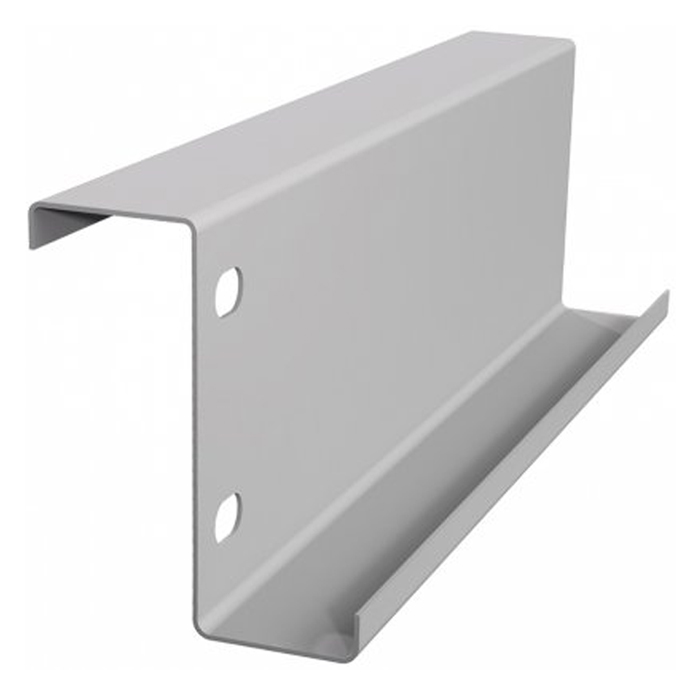
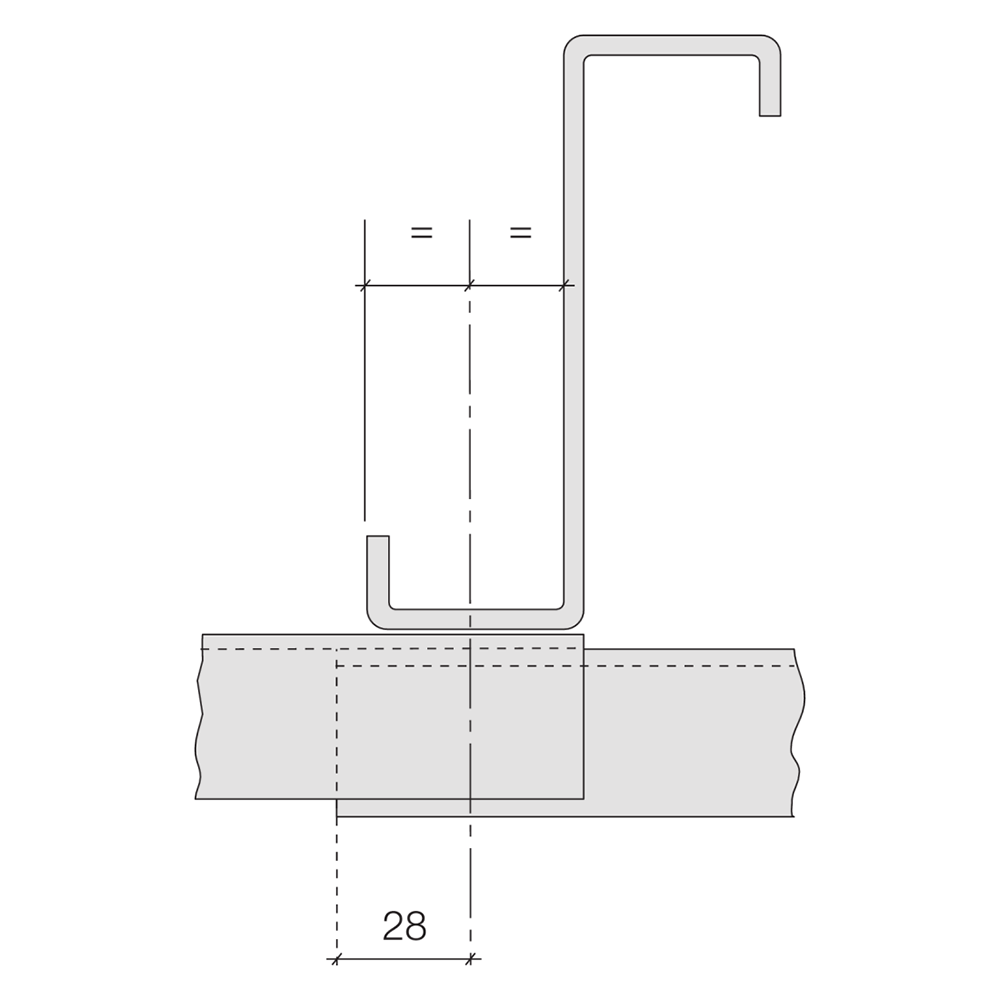
These are closed steel sections known for their efficiency in compression and sleek appearance.
Square & Rectangular Hollow Sections (SHS/RHS): Have flat surfaces for easier connection detailing. Offer excellent torsional resistance and a modern, clean aesthetic.
Circular Hollow Sections (CHS): Provide uniform strength in all directions, making them exceptionally efficient as compression members (like columns and struts). They have the lowest wind drag coefficient.
Why Choose Pre-Engineered Buildings Over Traditional Civil Construction?
In today’s fast-paced industrial and commercial landscape, speed, efficiency, and cost control aren’t just advantages—they’re necessities. This is where Pre-Engineered Buildings (PEBs) emerge as the definitive choice over traditional Full Civil Construction for a wide range of applications. The decision between these two methodologies represents a fundamental shift from a piecemeal, sequential approach to an integrated, systems-based solution.
8 Compelling Reasons to Choose PEB :
1. Unmatched Speed of Construction (40-60% Faster)
PEB: Components are manufactured off-site in a controlled factory environment while site preparation occurs simultaneously. On-site, it’s a rapid “bolt-together” assembly with pre-drilled, pre-marked components. A typical 10,000 sq.m. warehouse can be enclosed and weathertight in 8-12 weeks.
Traditional: Sequential site-dependent processes (foundation → curing → steel fabrication → erection → cladding). Extensive on-site welding, cutting, and fitting. Similar projects take 6-8 months or more.
Business Impact: Faster Return on Investment (ROI). Begin operations and generate revenue months earlier.
2. Significant Cost Savings (20-30% Lower Overall Cost)
Savings are realized across the project lifecycle:
Optimal Material Use: PEBs use tapered sections (steel only where structurally needed), leading to a 20-30% lighter structural weight.
Lighter Foundations: Reduced dead load allows for smaller, more economical foundations.
Reduced Labor Costs: Faster assembly requires fewer skilled man-hours on-site.
Predictable Budgeting: The single-source, turnkey PEB package minimizes cost overruns and surprises common in traditional projects with multiple vendors.
3. Superior Quality & Consistency
PEB: Fabricated in a factory-controlled environment using CNC machinery, automated welding (Submerged Arc Welding), and strict quality control protocols. This ensures precision, consistency, and a high-quality finish on every component.
Traditional: Quality heavily depends on on-site conditions and varying crew skills. Weather, manual welding, and field modifications can lead to inconsistencies.
4. Design Efficiency for Large, Clear Spans
PEB: Engineered specifically for long, column-free interiors (economical spans of 20m-60m, possible up to 100m+). This maximizes usable space for machinery, storage racks, and production lines.
Traditional: Achieving large clear spans requires heavier, more expensive trusses or beams, often at a significant cost premium.
5. Built-in Future Expandability
PEB: Designed with modularity in mind. Adding length (more bays) or even width in some configurations is straightforward. The structural system is designed for seamless future expansion with minimal disruption.
Traditional: Expansions are complex, expensive, and often require major structural retrofitting, leading to significant operational downtime.
6. Lower Maintenance & Energy Efficiency
PEB: Modern systems feature factory-applied, durable finishes (advanced paint systems, galvanization). Integrated insulated roof and wall panels offer excellent thermal performance, reducing long-term heating/cooling costs and maintenance.
7. Single-Source Responsibility & Simplified Management
PEB: You work with one vendor responsible for the entire structural system—design, engineering, fabrication, supply, and often erection. This drastically simplifies project management, coordination, and accountability.
Traditional: You must manage and coordinate multiple contractors—civil, structural steel fabricator, cladding supplier, and erectors—increasing complexity and potential for disputes.
8. Sustainability & Environmental Benefits
PEB: The efficient use of steel reduces material consumption. Precision fabrication minimizes on-site waste. Faster construction reduces the environmental footprint of the site operation. Many components are also recyclable at end-of-life.
Pros and Cons of Different Types of Primary Members
| Feature | Key Advantages | Key Considerations |
|---|---|---|
|
Built-up (Tapered I) |
– Optimal Material Efficiency (saves 15-30% steel). – Long Clear Spans (up to 80m+). – Custom-Designed for exact loads. |
– Requires dedicated design & fabrication. – Primarily for sloped-roof, single-story frames. |
|
Readymade (H-Beam – UC) |
– Superior Axial Load Capacity. – Immediate Availability. – Excellent for heavy point loads & multi-story construction. |
– Constant cross-section can be less weight-efficient for pure bending. – Higher per-ton cost than built-up for long spans. |
|
Readymade (I-Beam – ISMB) |
– Most Economical for small spans. – Simple & Fast to fabricate and erect. |
– Limited span and load capacity. – Less efficient section geometry. |
|
Tubular (SHS/RHS) |
– High Aesthetic & Architectural Value. – Excellent Torsional Stiffness. – Good fire resistance rating. |
– Higher material cost. – Welded connections require careful detailing. |
|
Tubular (CHS) |
– Most Efficient Compression Member. – Minimal Wind Load. – Clean, uniform appearance. |
– Highest connection complexity and cost. – Internal corrosion protection needed if open. |
Decision Matrix: PEB vs. Full Civil
| Parameter | Pre-Engineered Building (PEB) | Full Civil / Conventional Construction |
|---|---|---|
|
Project Time |
Fast (Months) |
Slow (6-12+ Months) |
|
Total Project Cost |
Lower (Optimized System) |
Higher (Material & Labor Intensive) |
|
Construction Quality |
High & Consistent (Factory) |
Variable (Site-Dependent) |
|
Design for Large Spans |
Excellent & Economical |
Possible but Costly |
|
Foundation Cost |
Lower (Lighter Structure) |
Higher |
|
Future Expansion |
Easy & Modular |
Difficult & Expensive |
|
Ideal For |
Warehouses, Factories, Hangars, Showrooms, Retail Malls, Sports Complexes, Workshops |
High-Rise Buildings, Complex Architectural Icons, Heavy Industrial Process Plants, Very Small Projects
|
Frequently Asked Question
You don't have to decide alone. This is our core expertise. We make the recommendation based on a detailed analysis of your:
Span & Bay Size: Built-up for >25m spans, Readymade/Hot-Rolled for shorter or multi-story bays.
Load Requirements: Heavy cranes/multi-story point to H-Beams; standard warehouse loads point to Built-up.
Architectural Vision: Exposed structure aesthetics point to Tubular or finished Built-up sections.
Budget & Timeline: Readymade can be faster for procurement; Built-up is more optimized for total cost on large spans.
"Stronger" is not the right metric; "more efficient" is. For a long-span, uniformly loaded rafter, a tapered built-up section will be lighter and use less steel to achieve the same strength as a heavier, constant-depth H-Beam. However, for a heavily loaded column, a hot-rolled UC (H-Beam) is often the most straightforward and robust choice. Strength is a function of design, not just the category.
Absolutely. In fact, hybrid designs are often the most optimal. A very common and efficient design is:
Built-Up Tapered Sections for the main roof rafters (optimizing for bending).
Hot-Rolled UC (H-Beam) for the main columns (optimizing for axial compression).
Tubular SHS for the entrance portal and canopies (optimizing for aesthetics and torsion).
This approach ensures each member performs its specific duty in the most effective way.
The protection system (priming, painting, galvanizing) is applied to all types, but considerations differ:
Built-up/Readymade: All surfaces are accessible. Hot-dip galvanizing is excellent for harsh environments.
Tubular Sections (SHS/CHS): Internal corrosion protection is critical. We specify either hot-dip galvanizing after fabrication (which coats the inside) or use sealed sections with internal spray coatings. Ventilation/drain holes must be carefully detailed.
Built-up tapered sections are the original innovation that made PEBs revolutionary. They are not just a component; they embody the core PEB philosophy of "form follows function." By varying the depth precisely according to the bending moment diagram (deep where stress is high, shallow where it's low), they eliminate redundant steel. This results in the lightest possible frame for a given span, which cascades into savings in foundation size, transportation, and erection, making them the most economical choice for standard large-span industrial buildings.
Our built-up members undergo a rigorous, controlled process:
CNC Cutting: Steel plates are precision-cut using Computer Numerical Control for accuracy.
Web Tapering: The web plate is cut to its customized tapered profile.
Assembly & Welding: Plates are assembled in a dedicated jig. The web-to-flange welds are performed using automatic submerged arc welding (SAW), which ensures deep penetration, high strength, and exceptional consistency along the entire length.
Stiffener Welding: Bearing plates, intermediate stiffeners, and connection splice plates are welded on.
Quality Checks: Every member undergoes dimensional verification, visual weld inspection, and often non-destructive testing (like ultrasonic testing for critical welds).
Surface Preparation & Painting: The member is shot-blasted and painted with a protective primer system.
As a general rule of thumb, built-up sections become the more economical choice when clear spans exceed approximately 25-30 meters. Below this span, the fabrication cost of a custom-built member can outweigh the material savings. For shorter spans with very heavy loads (like supporting a large crane), a readymade hot-rolled section (like a UB) might still be preferable due to its inherent stiffness and simpler fabrication for that specific heavy-load case. We perform detailed comparative designs to give you the most cost-effective recommendation.